
Bunker Fuel Measurement with Coriolis Flow Meters
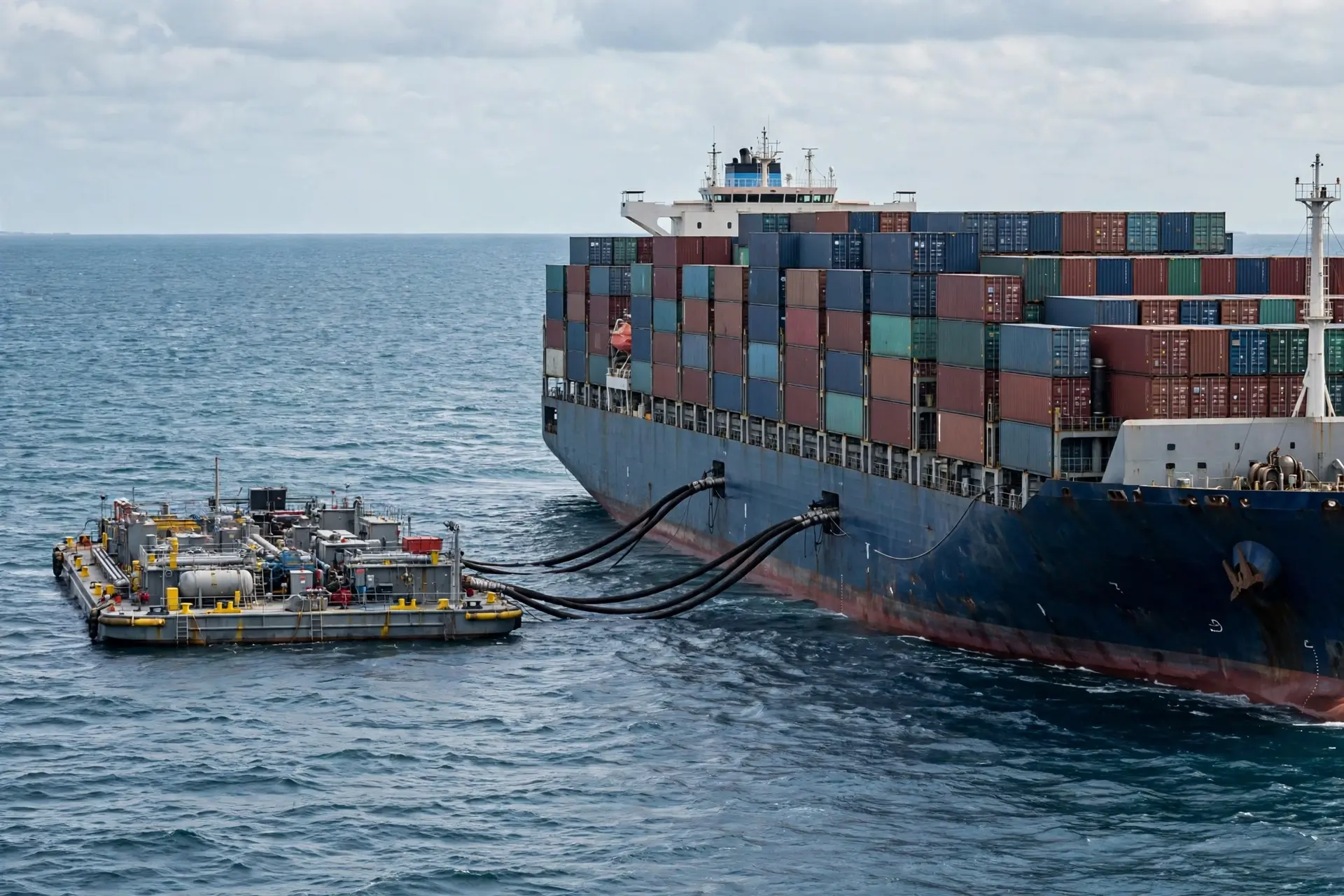
End bunker quantity disputes: how Coriolis marine fuel flow meters measure mass directly, unaffected by viscosity and temperature swings, with density and temperature in one device.
Few commercial disputes in shipping are as persistent — or as expensive — as disagreements over bunker fuel quantity. A marine fuel flow meter based on Coriolis technology addresses the root cause of most of these disputes by measuring mass directly. For reliable bunker fuel measurement, mass is the only quantity that cannot be argued with: a ton of fuel is a ton of fuel, regardless of its temperature, viscosity, or how much air was entrained during delivery.
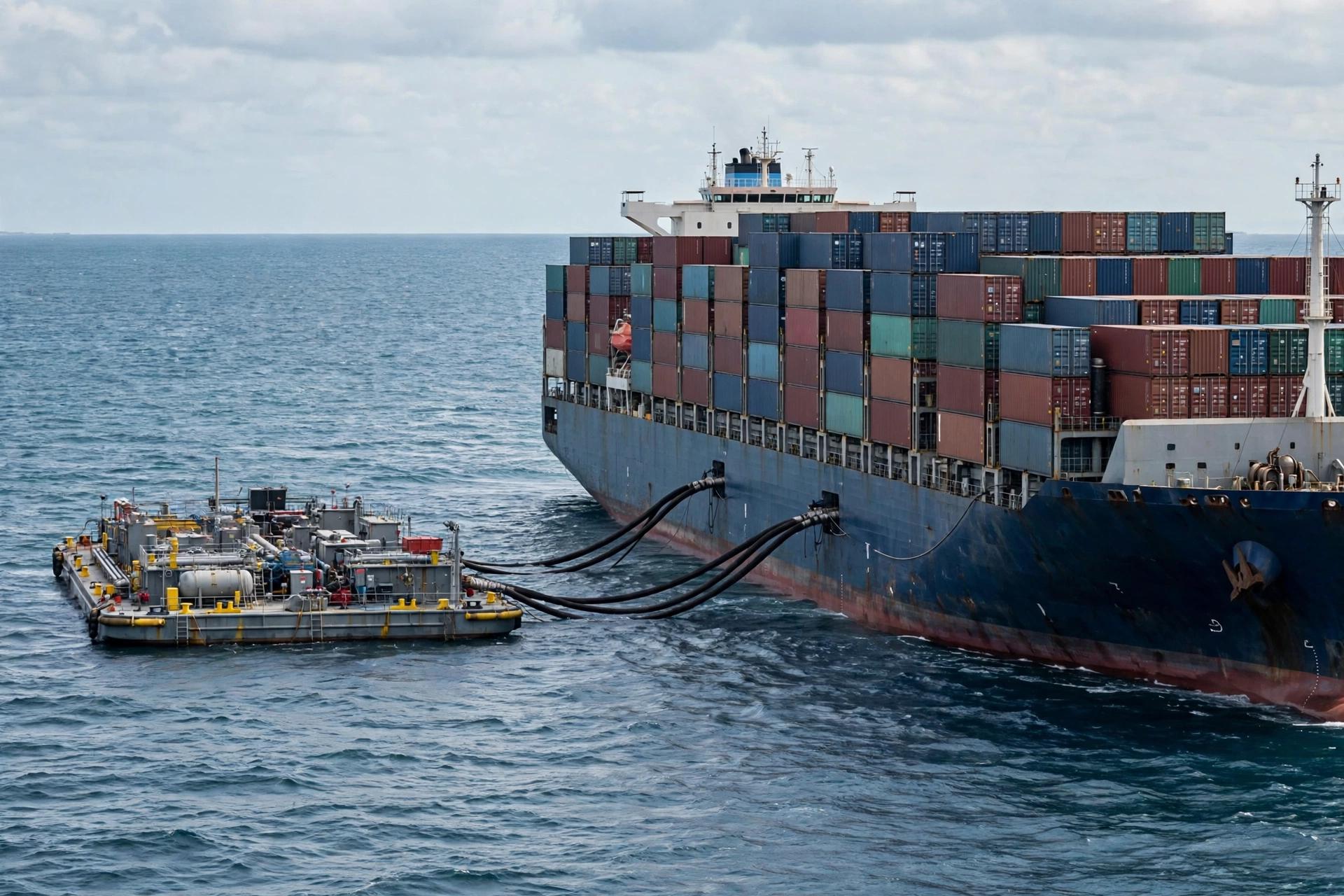
Why bunker quantity disputes keep happening
Traditional bunker delivery relies on tank soundings taken before and after delivery, converted to mass using sampled density and temperature. Every step introduces uncertainty: tank tables may be outdated, trim and list affect soundings, and the density sample may not represent the full delivery. The notorious cappuccino effect — air deliberately or accidentally entrained in the fuel during pumping — makes the fuel appear to occupy more volume than it really does, so the buyer pays for froth. These are not theoretical risks; quantity shortfalls are among the most common claims in bunker supply. Continuous, tamper-evident mass measurement during the entire delivery eliminates the gaps that disputes grow in.
Viscosity and temperature swings: why volumetric meters drift
Bunker fuels range from light marine gas oil to heavy fuel oil with viscosities that change dramatically with temperature. Volumetric meters — turbine, positive displacement, or oval gear — are all influenced by viscosity: their calibration factor shifts as the fuel heats or cools, and wear over time changes their response further. A Coriolis meter's operating principle is fundamentally different. It measures the phase shift of a vibrating tube caused by the mass flowing through it, a phenomenon that does not depend on the fluid's viscosity, conductivity, or flow profile. Whether the fuel is hot and thin or cold and thick, the mass reading remains stable, which is exactly what bunker measurement demands.
One meter, three measurements: mass flow, density, temperature
A Coriolis marine fuel Coriolis mass flow meter does more than totalize mass. The same vibrating tube that measures mass flow also measures the fluid's density, and an integrated temperature sensor completes the picture. This matters for two reasons. First, density monitoring during delivery provides an immediate check on fuel quality consistency and can reveal anomalies such as excessive aeration. Second, having all three values from a single instrument with a single timestamp removes the synchronization errors that occur when separate devices are combined. The delivery report — mass delivered, average density, temperature profile — comes from one coherent data source.
Regulation is moving toward mass-based bunkering
The industry's direction is clear. Since 2017, Singapore — the world's largest bunkering port — has required mass flow meters for marine fuel oil deliveries, a move that sharply reduced quantity disputes in its waters. ISO 22192 provides a standardized framework for bunker fuel mass flow metering, giving buyers, sellers, and surveyors a common technical language. More ports and charterers now specify or prefer mass-based measurement in bunker contracts. Installing Coriolis-based measurement is therefore not only a dispute-avoidance measure but also a way to future-proof bunker operations against tightening requirements.
FAQs
What is the cappuccino effect in bunkering?
It refers to air entrained in bunker fuel during delivery, which inflates the apparent volume measured by tank soundings or volumetric meters. Because a Coriolis meter measures true mass, entrained air has far less effect on the billed quantity, and density readings can help flag aeration.
Does fuel viscosity affect a Coriolis meter's accuracy?
Practically no. Coriolis measurement is based on mass-induced phase shift in a vibrating tube, not on the fluid's viscous or flow-profile characteristics. Accuracy remains stable across the wide viscosity range of marine fuels, from gas oil to heated heavy fuel oil.
Can a Coriolis meter detect fuel quality issues during bunkering?
The continuous density output provides a useful quality indicator: sudden density shifts during delivery can signal contamination, excessive aeration, or fuel switching. While it does not replace laboratory analysis, it gives the crew real-time awareness.
Is a Coriolis meter suitable for both supply barges and receiving vessels?
Yes. Coriolis meters are installed on bunker barges, at terminal loading arms, and on receiving vessels' bunker manifolds. Their insensitivity to installation effects and minimal straight-pipe requirements make them practical in tight marine spaces.
How does mass-based billing change the bunker delivery note?
Instead of opening and closing soundings converted with sampled density, the delivery note is based on the meter's mass totalizer, supported by logged density and temperature. This produces a transparent, auditable record that both parties can trust.
Quantity disputes cost time, money, and relationships. If you operate bunker barges, terminals, or vessel fleets and want measurement both sides can accept, contact VIBOTRA — we will help you select and size a Coriolis solution for your fuels, flow rates, and installation constraints.