
Coriolis Flow Meter Middle East: Oil & Gas Selection Guide
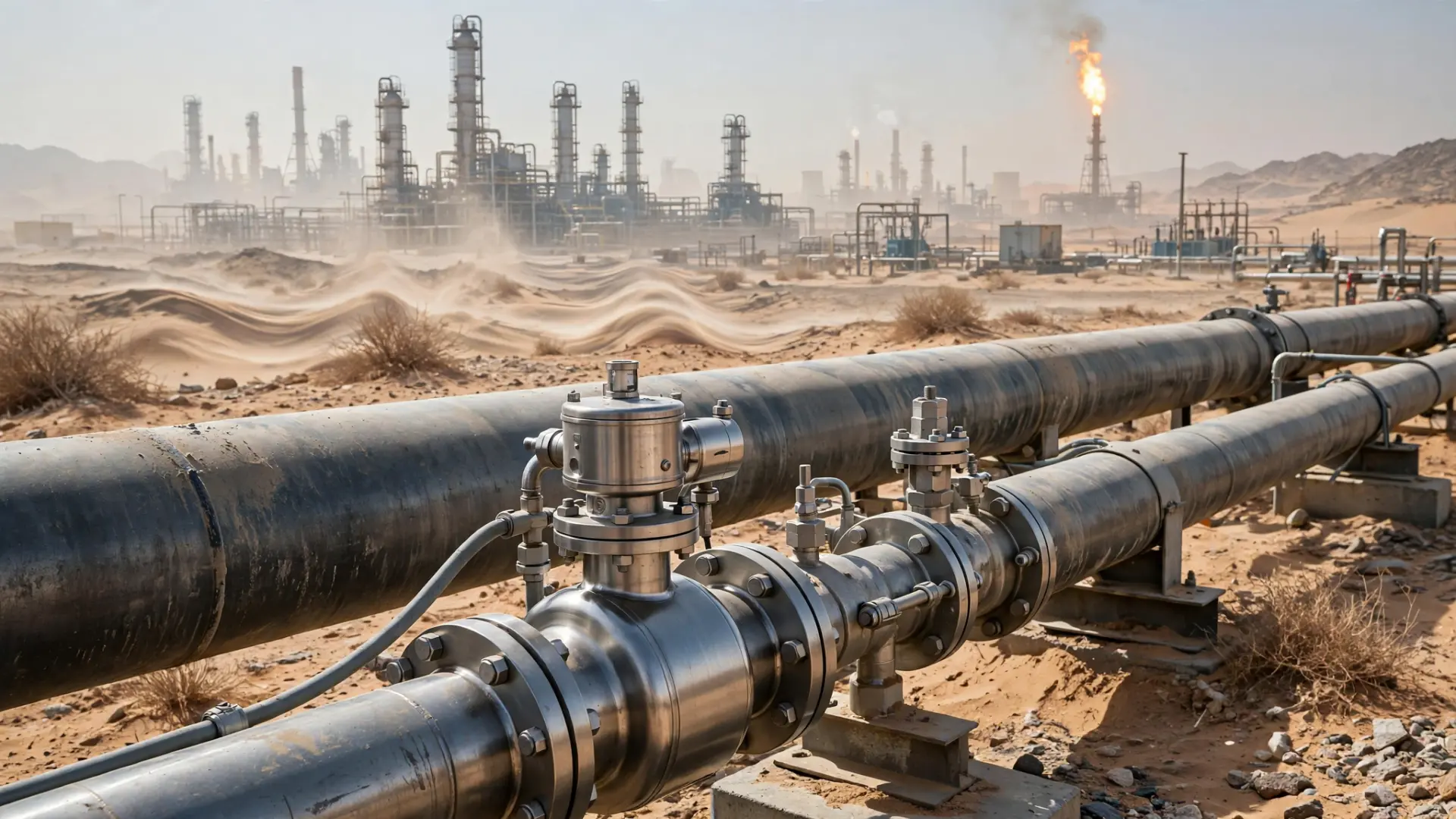
How Gulf oil & gas engineers select Coriolis flow meters for desert heat, sandy crude and custody transfer — sizing, materials and accuracy.
A Coriolis meter that held its accuracy on a test bench in Rotterdam can read 2% off on a Saudi wellhead in August. Same meter, same calibration — but the ambient is 55°C, the crude carries fine desert sand, and the flow swings from a trickle at dawn to full rate by noon. Choosing a Coriolis flow meter for Middle East oil and gas duty is less about the datasheet and more about the environment the meter has to live in.
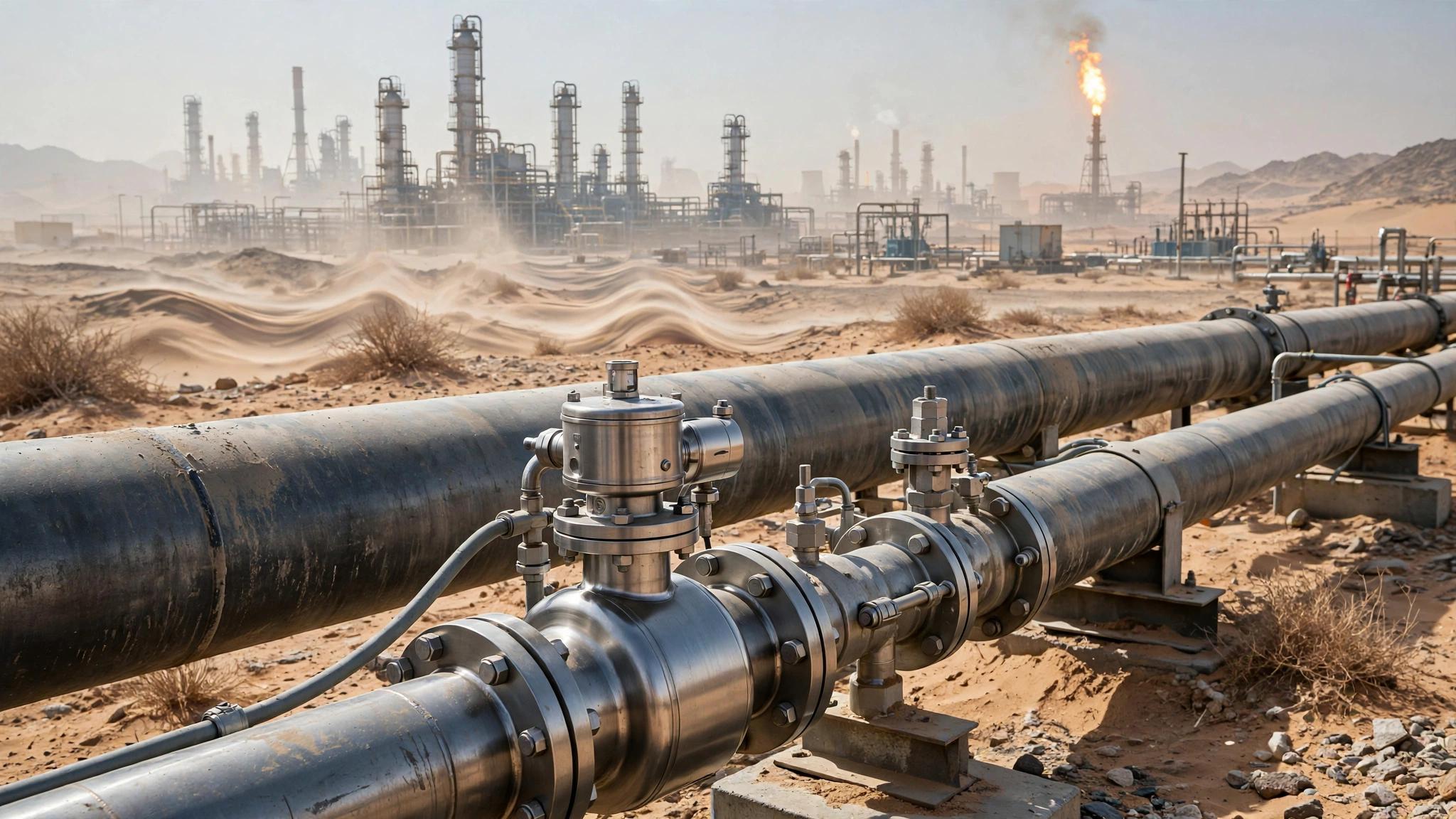
This guide is written for the engineers who sign off on those meters: what actually breaks in Gulf service, how to size for real operating conditions, and which spec lines on the datasheet deserve your attention.
Desert Heat Is the Real Spec Sheet
Most flow meters are specified at 20°C. A Middle East installation rarely sees 20°C. Summer ambients of 50–55°C are normal across the Gulf, and a meter bolted to a sun-baked pipe rack can see surface temperatures well above that. Electronics hate that. Zero stability drifts, display modules age fast, and junction-box seals harden and crack.
What to do about it is unglamorous: demand a transmitter rated well above your worst-case ambient, not just at it. Fit a simple sunshade — a bent sheet of galvanized steel does more for transmitter life than any premium feature. And plan the zero calibration for the hottest part of the day, because that is when the meter earns its keep. A meter zeroed at dawn and trusted at 2 p.m. is how small systematic errors get born.
Heat also works through the process fluid. Crude arriving from a separator at 60–80°C swings the tube temperature, and tube temperature changes the stiffness that the Coriolis phase measurement depends on. Modern transmitters compensate for this automatically — but only if the temperature sensor is actually reading tube temperature and the compensation is enabled in the configuration. Check both. It is a five-minute check that too many commissioning crews skip.
Size for the Real Flow, Not the Pipe
The most expensive mistake in Coriolis selection is matching the meter to the pipe instead of the flow. A DN50 line does not need a DN50 meter if it normally carries 0–1,000 kg/h with occasional peaks. An oversized meter spends its life at 5% of range, where even a good Coriolis meter struggles — accuracy quotes on datasheets apply near full scale, and turndown has real limits.
Work from your operating envelope instead: normal flow, minimum sustained flow, and the peak you actually see (not the design peak from a 2012 P&ID that never happened). Size so the normal flow sits in the upper half of the meter's range. Pressure drop matters less than people think on liquid service, but on gas and flash-prone liquids it can push you into two-phase trouble — worth one calculation, not a guess.
Here is the opinionated part: for custody transfer, do not accept anything worse than ±0.1% of mass flow. A ±0.5% meter belongs on a fuel skid or a process loop, not on a sales meter where every tenth of a percent is money changing hands. If the budget only stretches to one premium meter on the project, put it on the custody point and buy the process meters one accuracy grade down.
Compact meters in the DN25–DN50 range cover a surprising share of Middle East oilfield duty — chemical injection, fuel gas to heaters, and produced-water metering. A compact option like our ultra-compact Coriolis mass flow meter (DN50) fits skids where a full-size meter simply will not, without giving up the mass-flow measurement that makes Coriolis worth buying in the first place.
Sand, Water Cut and Changing Crude
Gulf crude is rarely clean. Fine sand rides along from the reservoir, and water cut climbs as fields mature — 30%, 50%, sometimes 80% water in late life. Both punish the wrong technology. Turbine meters wear; differential pressure drifts with density.
Coriolis handles the density problem elegantly: it measures mass directly, so a swing from light crude to heavy water-cut emulsion does not move the reading the way it moves a volumetric meter. The density output is a bonus — many operators use it as a rough water-cut indicator for process trending. It is not a replacement for a proper BS&W analyzer, but it is free data from a meter you already own.
Sand is the harder problem. Oscillating tubes and abrasive solids are not friends over a 10-year life. Keep velocities sane — erosion scales viciously with velocity — and avoid mounting the meter at a low point where sand settles into the tubes during shutdowns. For heavy-oil and produced-fluid service, thicker-wall tube designs and 316L wetted parts are the baseline; anything less is a three-year meter in a ten-year plant. Our compact Coriolis meter for oil service is built around exactly that kind of duty.
Outputs and Materials: Keep It Boring
On outputs, resist the exotic. 4–20 mA with HART covers 90% of Gulf brownfield tie-ins, and Modbus RTU covers most of the rest. Pick the protocol your DCS already speaks; a meter with a protocol nobody on site can troubleshoot is a meter that will be bypassed within a year. If you need pulse output for a batch controller or a prover, confirm the pulse scaling range before purchase — not after the skid arrives.
On materials, 316L stainless wetted parts are the default for a reason, and they cover most crude, fuel and produced-water service. Where produced fluids carry H2S or CO2, say so explicitly in the enquiry and ask what the supplier recommends — do not let a standard-materials quote slide through on sour service. And match the hazardous-area rating to your site's actual zone classification; a meter with the wrong Ex marking is not a bargain, it is a rejected delivery.
Installation: Two Mistakes That Cost Real Money
Coriolis meters famously need no straight pipe run, and that is true — which makes it ironic how often they get installed badly anyway. The two mistakes I see repeated across Gulf sites:
- Zeroing under the wrong conditions. Zero must be set with the tubes full of process fluid, at operating temperature, with genuinely zero flow — not "the valve is probably closed." A bad zero is a permanent offset on every reading the meter ever takes. Block in, verify, then zero.
- Trapping gas or settling sand. On liquid service, mount so gas can escape upward rather than collecting in the tubes; on flashing liquids, keep enough back-pressure to stay single-phase. And as noted above, low points collect sand during shutdowns — orient and locate the meter accordingly.
Get those two right and the meter mostly looks after itself. Get them wrong and you will spend the next two years arguing with a reading that was never the meter's fault.
FAQs
My site hits 55°C in August. Will the meter drift?
Not if it is rated for it. Spec the transmitter for your worst-case ambient with margin, shade it from direct sun, and zero it at operating temperature. The drift people blame on heat is usually a bad zero, not the electronics.
Our crude carries sand. Will it destroy the tubes?
At sane velocities, no — but keep it out of low points where it settles, and do not oversize the meter (low velocity in the tubes lets sand drop out). For erosive duty, ask for thicker-wall tube construction.
Can one meter do custody transfer and process control?
Physically yes, commercially think twice. Custody points deserve ±0.1% or better and independent verification; process loops do not need that grade. One premium meter on the sales point beats two mediocre meters everywhere.
Do I really need zero straight pipe run?
For the measurement itself, yes — Coriolis does not need upstream straight run the way turbine or DP meters do. You still need sensible piping: no trapped gas pockets, no flashing, and support the meter so pipe stress does not load the sensor.
HART or Modbus — which should I wire?
Whichever your control system already uses. HART over 4–20 mA is the safe default for brownfield DCS tie-ins; Modbus RTU suits PLC-based skids and new builds. Do not introduce a protocol your site team cannot troubleshoot.
Selecting a Coriolis flow meter for Middle East oil and gas service comes down to a short list: rate it for the heat, size it for the real flow, respect the sand, and zero it properly. Do those four and the technology does the rest — direct mass flow, immune to the density swings that make Gulf crude so hard to measure volumetrically.
If you are putting together a metering package — a wellhead skid, a fuel loading terminal, or a custody transfer point — talk to our engineers. We supply Coriolis meters across the Gulf, including options for bunker and marine fuel measurement, and we will help you size the meter for your actual operating envelope rather than the pipe size.