
Coriolis vs Electromagnetic Flow Meter: How to Choose
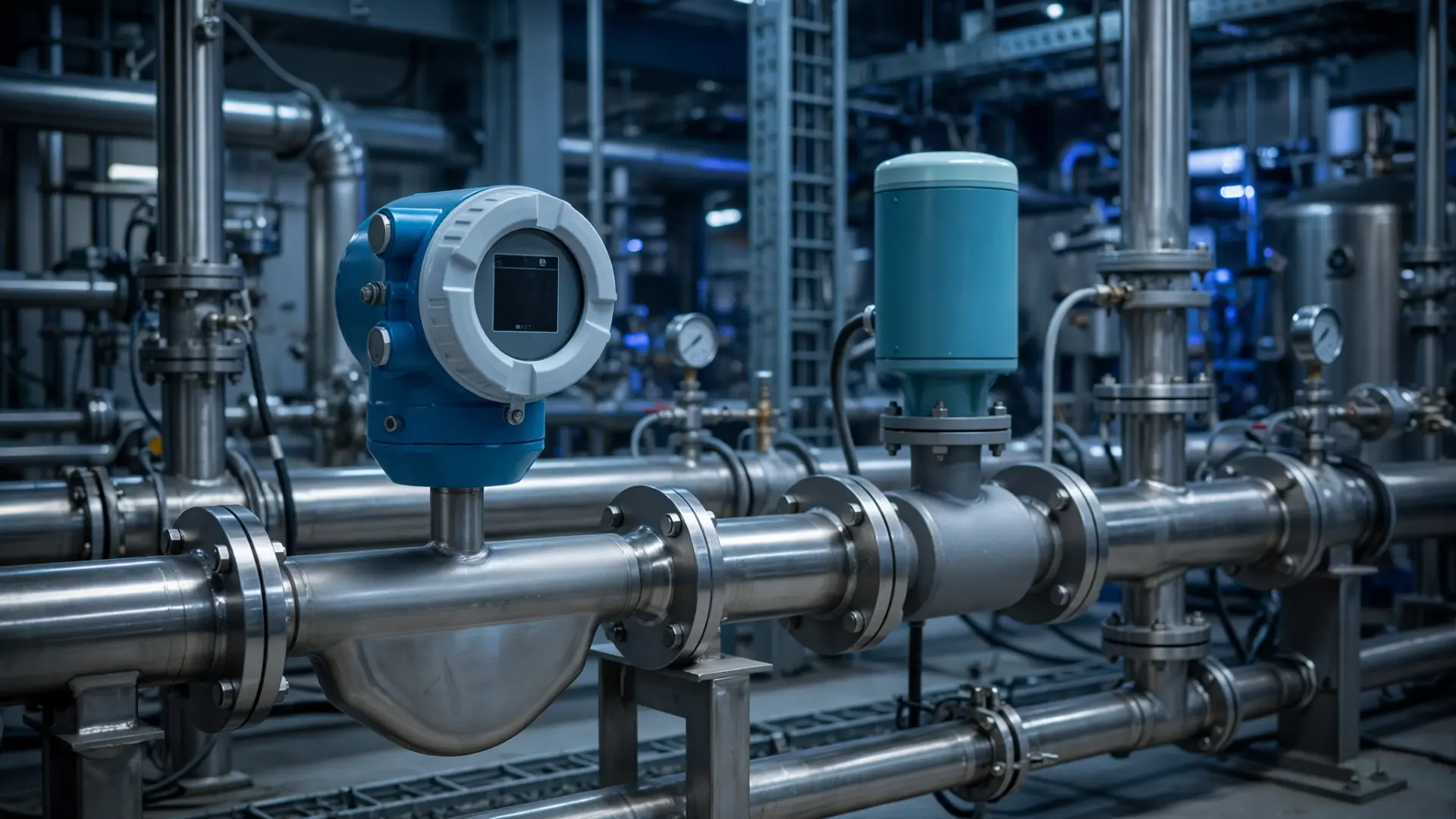
Coriolis or electromagnetic flow meter? Compare accuracy, fluid compatibility, cost and installation to choose the right flow meter for your process.
Choosing between a coriolis vs electromagnetic flow meter setup is one of the most common decisions process engineers face — and one of the most consequential for measurement accuracy. Both are modern, digital, low-maintenance technologies with no mechanical wear parts in the flow path, yet they measure fundamentally different things: a Coriolis meter measures mass flow directly, while an electromagnetic flowmeter measures volumetric flow. That single difference, together with the conductivity of your fluid, shapes almost everything else: accuracy, usable applications, installation requirements, and cost.
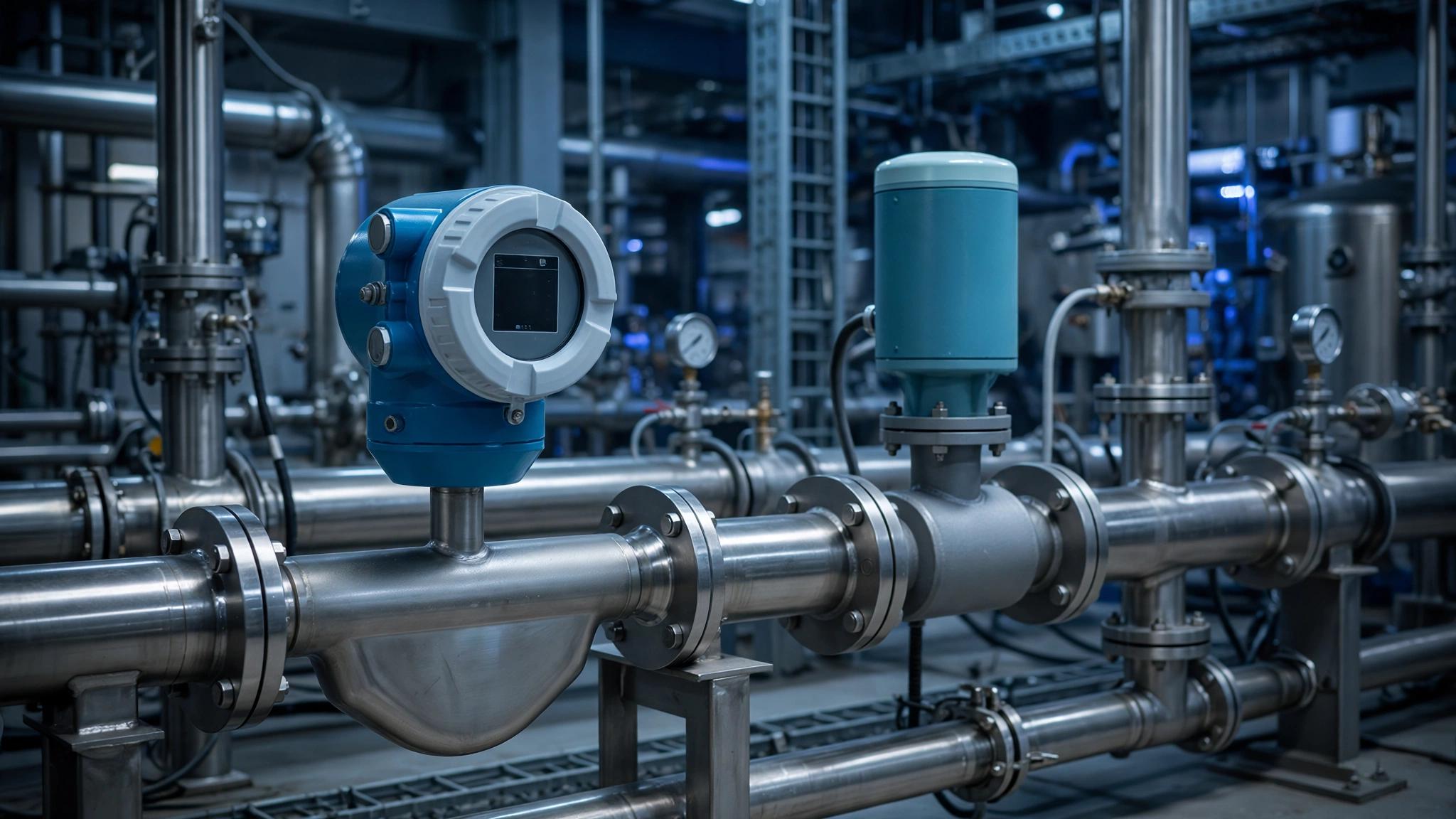
This guide compares the two technologies side by side across working principle, accuracy, fluid compatibility, installation, and cost, so you can select the right meter for your process with confidence.
How Each Technology Works
A Coriolis mass flow meter passes the fluid through one or two vibrating tubes. As fluid flows through the oscillating tube, it experiences Coriolis forces that twist the tube in proportion to the mass flow rate. Sensors detect the phase shift between the inlet and outlet, and the transmitter converts it directly into mass flow. A key bonus: the resonant frequency of the tubes also reveals the fluid density, so one Coriolis meter delivers mass flow, density, and (via an integrated temperature sensor) temperature — enough to compute volumetric flow and concentration.
An electromagnetic flowmeter (magmeter) works on Faraday's law of electromagnetic induction. Coils generate a magnetic field across the pipe, and as a conductive liquid flows through it, a voltage proportional to the flow velocity is induced across a pair of electrodes. The transmitter converts this voltage into volumetric flow. Because the measurement depends on the fluid conducting electricity, magmeters only work with liquids above a minimum conductivity — typically around 5 µS/cm.
Both meter types are fully electronic with no mechanical wear in the flow path, and both typically offer the industry-standard outputs plants expect: 4–20 mA analog, pulse/frequency, and digital protocols such as HART or Modbus RTU for integration into DCS or PLC systems. The practical difference is not connectivity but the measurement itself — mass versus volume.
Accuracy, Rangeability and Measurement Variables
Accuracy is where Coriolis meters typically lead. A well-installed Coriolis meter commonly achieves ±0.1% to ±0.2% of reading on mass flow, with excellent repeatability, and turndown ratios up to 20:1 without losing performance. Electromagnetic flowmeters are also accurate — typically ±0.5% of reading, with some designs reaching ±0.2% — and offer wide turndown as well.
The deeper distinction is what is measured. Coriolis meters measure mass flow directly, which is what matters whenever the fluid's value, energy content, or chemical dosage is tied to mass: custody transfer, batching, blending, and dosing. They also output density, enabling concentration and mass-balance calculations. Repeatability is another Coriolis strength — often ±0.05% of reading — which is why batching systems that must hit the same target weight every cycle overwhelmingly specify Coriolis. Magmeters measure volumetric flow only; if your fluid density or temperature varies, you need separate instruments to convert to mass. For applications such as compact Coriolis metering on DN50 lines, the CMASS050TV ultra-compact Coriolis mass flow meter is designed to bring custody-transfer-grade accuracy into tight installations.
Fluid Compatibility: Conductivity Decides a Lot
Fluid properties often settle the debate by themselves:
- Conductive liquids (water, wastewater, acids, alkalis, slurries): both technologies work. Magmeters dominate here because they are simpler and cheaper, and a PTFE or rubber liner handles corrosive or abrasive media well.
- Non-conductive liquids (hydrocarbons, oils, solvents, deionized water): magmeters cannot measure these at all — Coriolis is the natural choice.
- Gases: magmeters cannot measure gas flow. Coriolis meters handle gas and mixed gas-liquid streams, though accuracy on very low-density gases requires careful sizing.
- High viscosity and two-phase flow: Coriolis meters cope well with viscous fluids and can flag entrained gas; magmeters tolerate slurries but need a fully filled pipe.
Wherever mass-based billing or density information is required — fuel, chemicals, food ingredients — a custody-transfer-class Coriolis meter such as the CMASS015TV Coriolis mass flow meter is typically the specified instrument.
Installation, Cost and Maintenance
On installation, magmeters need a full pipe and usually 5 diameters of straight run upstream and 2–3 downstream (follow the manufacturer's guidance), with electrodes in contact with the liquid. They introduce no pressure drop and no obstruction, which matters on large lines. Coriolis meters generally need no straight runs, but orientation and rigid mounting matter — especially with two-phase flow, where the tube should stay full — and the tube geometry of some designs creates a higher pressure drop that must be checked against your pump budget.
On cost, electromagnetic flowmeters are usually the lower-cost option across line sizes from DN15 up to DN2000, which is why they dominate water and wastewater plants. Coriolis meters cost more, particularly in large diameters, where the vibrating tube construction becomes expensive — beyond roughly DN150–DN200, Coriolis pricing rises steeply. Both technologies have no moving parts and need little routine maintenance; calibration intervals depend on the application, with custody-transfer installations typically verified annually or per local regulation. Two operating limits are worth checking against your datasheet: magmeter liners have temperature limits (PTFE constructions typically cover roughly −40 to +180 °C), while Coriolis meters with all-welded stainless tubes cover a wider temperature span but must be sized so that pressure drop across the tubes stays within the pump's margin. For conductive-liquid service at an attractive price point, the LDG-SUP-A100 series electromagnetic flowmeter covers a wide range of water and process applications.
Decision Guide: Which Meter for Your Application
Use this quick checklist:
- Choose Coriolis when you need mass flow directly (billing, dosing, batching), density or concentration data, when the fluid is non-conductive, when measuring gas, or when the highest accuracy justifies the price.
- Choose electromagnetic when measuring conductive liquids volumetrically, especially on large pipe sizes, in water/wastewater treatment, or when budget and zero pressure drop are priorities.
- Either works for conductive process liquids where accuracy requirements are moderate — then total cost of ownership, including calibration and spare parts, decides.
In borderline cases, run the numbers for your specific duty: compare the installed cost at your line size, the value of density data for your process control, and whether mass-based billing applies anywhere in your plant. That calculation usually points clearly to one technology.
FAQs
Can an electromagnetic flowmeter measure mass flow?
Not directly. A magmeter measures volumetric flow of conductive liquids. To get mass flow you must add a separate density measurement (and temperature compensation), which adds instruments, wiring, and uncertainty. A Coriolis meter measures mass flow in a single device.
Why can't a magmeter measure oil or deionized water?
Magmeters rely on Faraday's law: the fluid must conduct electricity to generate a measurable signal across the electrodes. Hydrocarbons, oils, and deionized water fall below the minimum conductivity threshold (typically ~5 µS/cm), so the meter reads zero regardless of actual flow.
Is a Coriolis meter always more accurate than a magmeter?
Generally yes on mass flow — ±0.1–0.2% of reading is routine for Coriolis versus ±0.5% for a typical magmeter — but the gap narrows with premium magmeter designs. The real accuracy advantage of Coriolis shows when fluid density varies, because mass flow stays correct while a volumetric reading drifts.
Do Coriolis meters need straight pipe runs?
No. Unlike magmeters, turbine, or ultrasonic meters, Coriolis meters are largely insensitive to upstream flow profile, so they need no straight inlet/outlet runs. What they do need is rigid, vibration-free mounting and correct orientation so the measuring tubes remain full.
Which technology is better for custody transfer?
Coriolis meters are the preferred choice for most liquid custody-transfer applications because they measure mass directly — the unit most commodities are bought and sold in — and provide density as a cross-check. Magmeters are used for custody transfer of water and other conductive liquids where volumetric billing applies.
Still deciding between a Coriolis and an electromagnetic flow meter for your project? Tell our engineers about your fluid, pipe size, and accuracy target — we will recommend the most cost-effective option and a matching model. Contact us for a free selection consultation and quotation.