
LPG Mass Flow Measurement with Coriolis Flow Meters
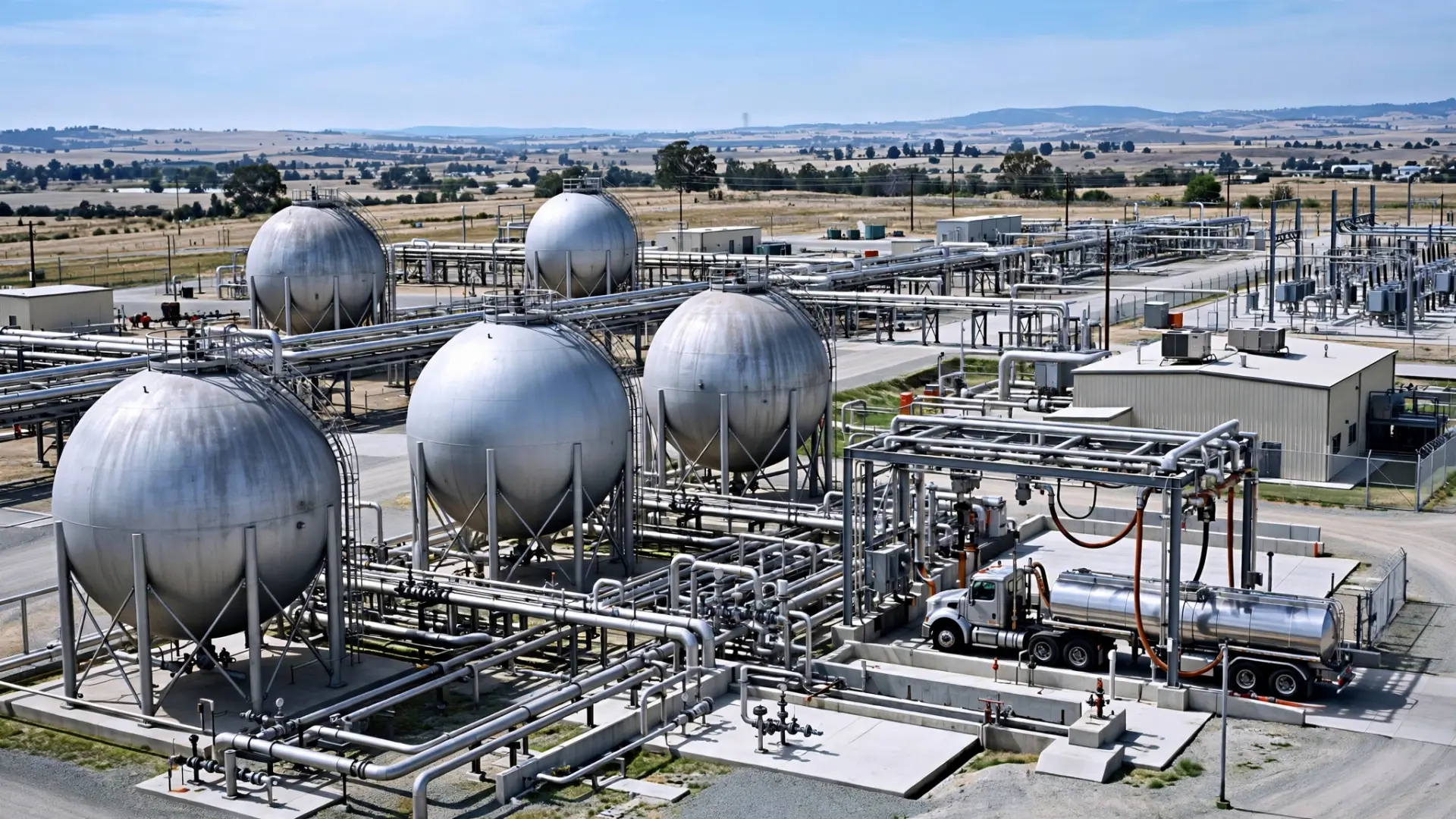
LPG's two-phase behavior and temperature swings defeat volumetric meters. Learn how Coriolis mass flow measurement delivers stable, custody-grade LPG accuracy.
LPG looks like a simple liquid fuel until you try to measure it accurately. Its tendency to flash between liquid and vapor, combined with constant temperature and pressure swings in the field, makes LPG mass flow measurement one of the more demanding routine metering tasks. An LPG coriolis flow meter handles these conditions by measuring mass directly — the one quantity that stays meaningful no matter what phase the LPG happens to be in at the meter.
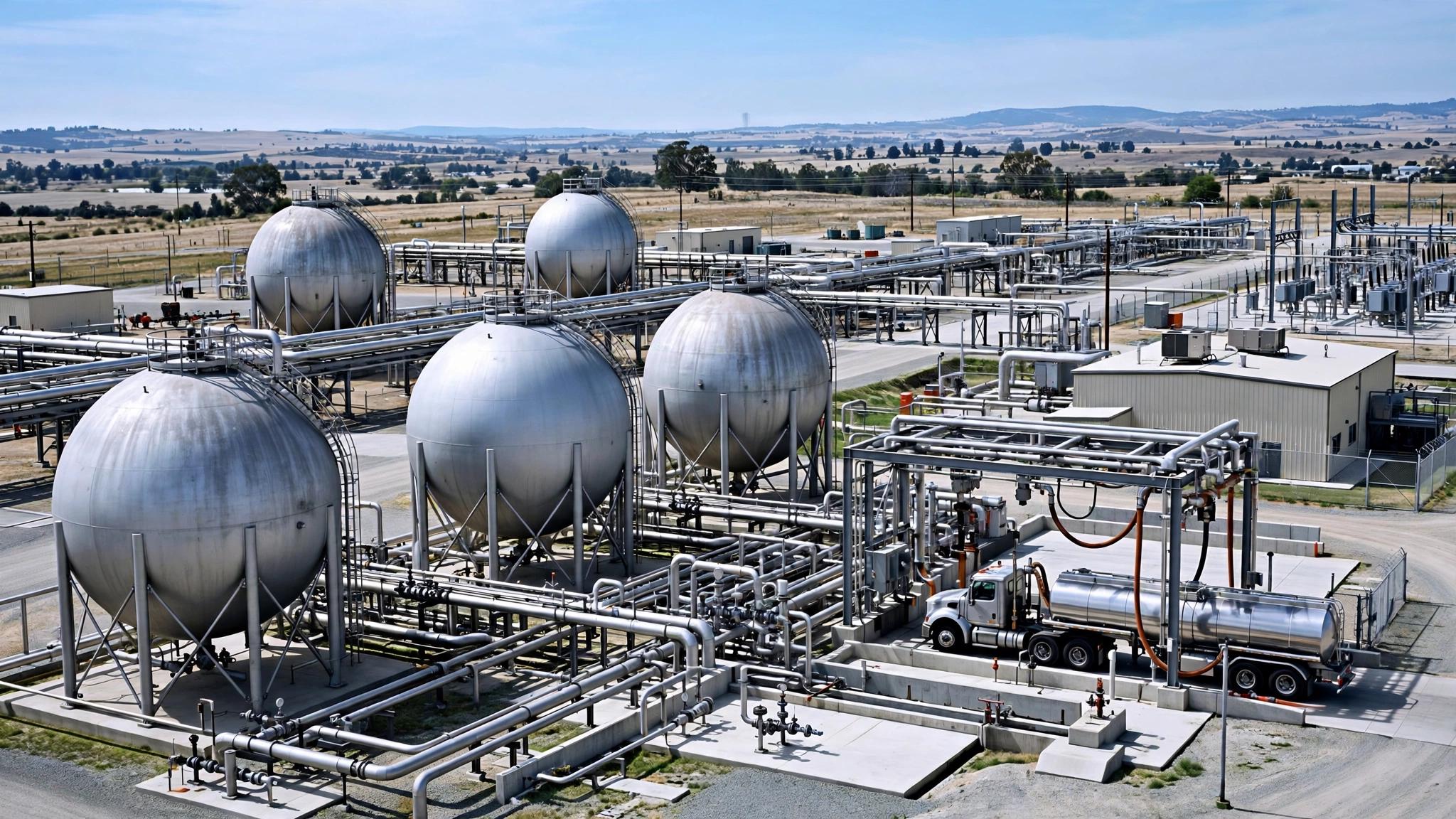
LPG's two-phase personality
LPG is stored and transported as a liquid under pressure, but it vaporizes readily whenever pressure drops or temperature rises — at pump inlets, across valves, and in sun-heated piping. The result is intermittent two-phase flow: slugs of vapor passing through the meter between stretches of liquid. Volumetric meters misread these conditions badly, because a liter of vapor and a liter of liquid contain vastly different masses. Coriolis meters are far more tolerant: while severe slug flow challenges any meter, a Coriolis device continues to report true mass flow through moderate entrained gas conditions that would render volumetric readings meaningless, and its density output flags when two-phase conditions occur.
Temperature and pressure swings in the field
An LPG skid that meters accurately on a cool morning may drift by afternoon. LPG density changes significantly with temperature — roughly an order of magnitude more per degree than water — so any volumetric measurement must be continuously corrected with accurate temperature and density data. In practice, temperature sensors have lag, density is often assumed rather than measured, and correction calculations add their own uncertainty. A Coriolis meter sidesteps this entirely: it measures mass flow and actual fluid density in the same tube at the same instant, so the mass total is correct without external compensation, from winter mornings to summer afternoons.
Where volumetric metering goes wrong
Positive displacement and turbine meters dominate legacy LPG installations, and both have structural weaknesses here. Positive displacement meters lose accuracy as internal clearances wear and as viscosity changes with temperature; they also require regular proving to hold their calibration. Turbine meters need stable, single-phase flow and sufficient straight pipe — conditions rarely guaranteed on compact LPG skids. Both technologies ultimately deliver volume, leaving the operator to convert to mass for billing. Each conversion step — temperature measurement, density determination, calculation — is another place for error to enter, and another calibration to maintain.
Stable, custody-grade accuracy with Coriolis
For LPG autogas dispensers, cylinder filling plants, and bulk loading terminals, Coriolis meters typically deliver ±0.1% to ±0.5% mass accuracy with excellent repeatability, and that performance holds across the product's normal temperature range without re-ranging or seasonal adjustment. The fast response of the vibrating tube tracks the rapid flow changes of dispenser operation, and minimal straight-pipe requirements simplify skid design. For operators who need dependable LPG measurement with a dedicated Coriolis meter, the payoff is straightforward: bills both sides trust, fewer calibration interventions, and metering that stays accurate as conditions change.
FAQs
Can Coriolis meters handle vapor slugs in LPG lines?
Coriolis meters tolerate moderate entrained gas far better than volumetric technologies and continue to report mass flow, while the density reading indicates two-phase conditions. For best results, good piping practice — such as keeping the meter full of liquid — should still be followed.
Why does temperature affect LPG volumetric meters so much?
LPG density changes strongly with temperature, so a fixed volume contains different mass at different temperatures. Without precise, real-time temperature and density compensation, volumetric totals drift with ambient conditions — a problem direct mass measurement avoids.
Do Coriolis meters need regular proving like PD meters?
Coriolis meters have no wearing measurement elements, so their calibration is inherently more stable over time than that of positive displacement meters. Verification intervals are typically set by the operator's quality system rather than by meter wear.
Are Coriolis meters suitable for LPG dispenser use?
Yes. Compact Coriolis meters fit dispenser cabinets, respond quickly to start-stop flow, and maintain accuracy at the low flow rates of vehicle or cylinder filling — duties where volumetric meters struggle.
What about LPG composition changes between suppliers?
Commercial LPG varies in its propane-butane ratio, which changes density. Because Coriolis meters measure mass directly and independently of composition, supplier-to-supplier variation does not affect the billed quantity.
If LPG measurement accuracy is costing you disputes or calibration headaches, it may be time to change the measurement principle. Contact VIBOTRA for sizing and application advice on Coriolis metering for your LPG dispensers, filling lines, or loading terminals.