
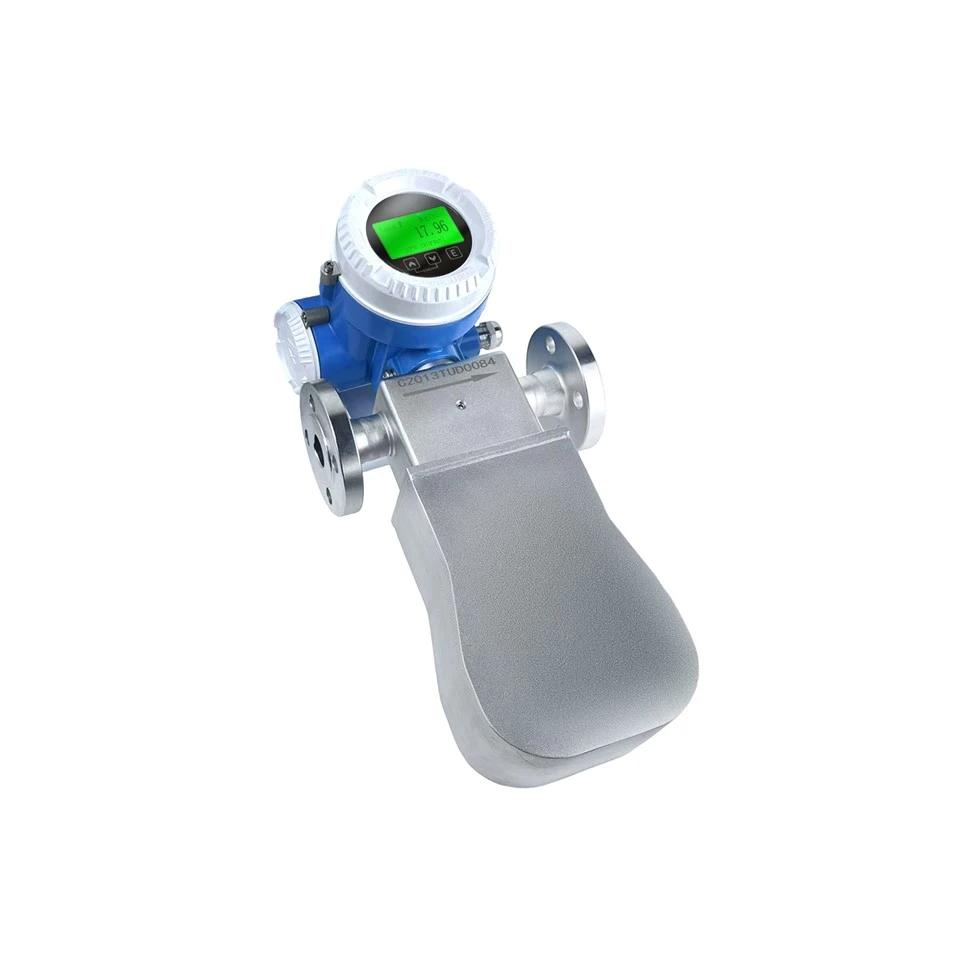
Fuel Coriolis Flow Meter
Core Advantages (Why It Is Especially Suitable for Fuel)
Direct Mass Flow Measurement, Unaffected by Physical Properties (Core Advantage): The density of fuel changes drastically with temperature (thermal expansion and contraction). Traditional volumetric meters (e.g., turbine meters, oval gear meters) require complex density meters, temperature sensors, and flow computers for temperature and pressure compensation, which increases system complexity and introduces errors. Coriolis mass flow meters directly provide highly accurate mass flow readings, eliminating errors caused by temperature and pressure changes. This makes them especially suitable for applications with large temperature fluctuations and high settlement requirements, such as aircraft refueling.
High Precision and Repeatability: Coriolis mass flow meters offer precision up to 0.1% or higher and excellent repeatability. This is crucial for high-value fuel trade settlements, minimizing financial losses due to metering errors and ensuring fair trade.
Multi-Parameter Measurement, One Meter for Multiple Uses: In addition to measuring mass flow, the Coriolis meter can simultaneously output density, temperature, and volumetric flow signals. Applications: Real-time density measurement can monitor fuel quality (e.g., differentiate between gasoline and diesel), detect fuel contamination, and automatically convert between volumetric and standard volumetric flow.
Insensitive to Fluid Property Changes: Whether it's light gasoline, viscous fuel oil, or blended biofuels, the meter's accuracy is largely unaffected by changes in viscosity and density. One meter can handle various fuels, making it highly versatile.
No Moving Parts, High Reliability, Low Maintenance: Unlike turbine meters, Coriolis meters have no moving parts, making them less prone to wear. They are not sensitive to small impurities in the fluid, have a long service life, and reduce maintenance costs and downtime.
Selection Table
|
Model |
Nominal diameter |
Medium temp. |
Max.W.P |
Max. flow-rate |
|||
|
inch |
mm |
kg/min |
Lb/min |
||||
|
CMASS001 |
1/12" |
DN01 |
-50℃~+150℃ |
≤ 10MPa |
0.2 |
0.44 |
|
|
CMASS002 |
1/10" |
DN02 |
-50℃~+150℃ |
≤10MPa |
1.6 |
3.53 |
|
|
CMASS003 |
1/8" |
DN03 |
-50℃~+150℃ |
≤10MPa |
3 |
6.61 |
|
|
CMASS004 |
1/6" |
DN04 |
-50℃~+150℃ |
≤10MPa |
5 |
11 |
|
|
CMASS008 |
1/4" |
DN08 |
-50℃~+150℃ |
≤10MPa |
20 |
44 |
|
|
CMASS015 |
1/2" |
DN15 |
-50℃~+150℃ |
≤10MPa |
60 |
132 |
|
|
CMASS020 |
3/4" |
DN20 |
-50℃~+150℃ |
≤10MPa |
100 |
220 |
|
|
CMASS025 |
1" |
DN25 |
-50℃~+150℃ |
≤10MPa |
200 |
440 |
|
|
CMASS040 |
1-3/4" |
DN40 |
-50℃~+150℃ |
≤10MPa |
450 |
992 |
|
|
CMASS050 |
2" |
DN50 |
-50℃~+150℃ |
≤10MPa |
650 |
1433 |
|
|
CMASS080 |
3" |
DN80 |
-50℃~+150℃ |
≤6.3MPa |
2000 |
4409 |
|
|
CMASS100 |
4" |
DN100 |
-50℃~+150℃ |
≤4MPa |
3000 |
6613 |
|
|
CMASS150 |
6" |
DN150 |
-50℃~+150℃ |
≤4MPa |
12000 |
26455 |
|
|
CMASS200 |
8" |
DN200 |
-50℃~+150℃ |
≤4MPa |
18000 |
39683 |
|
|
CMASS250 |
10" |
DN250 |
-50℃~+150℃ |
≤4MPa |
29000 |
63934 |
|