
Hydrogen Refueling Flow Measurement with Coriolis Meters
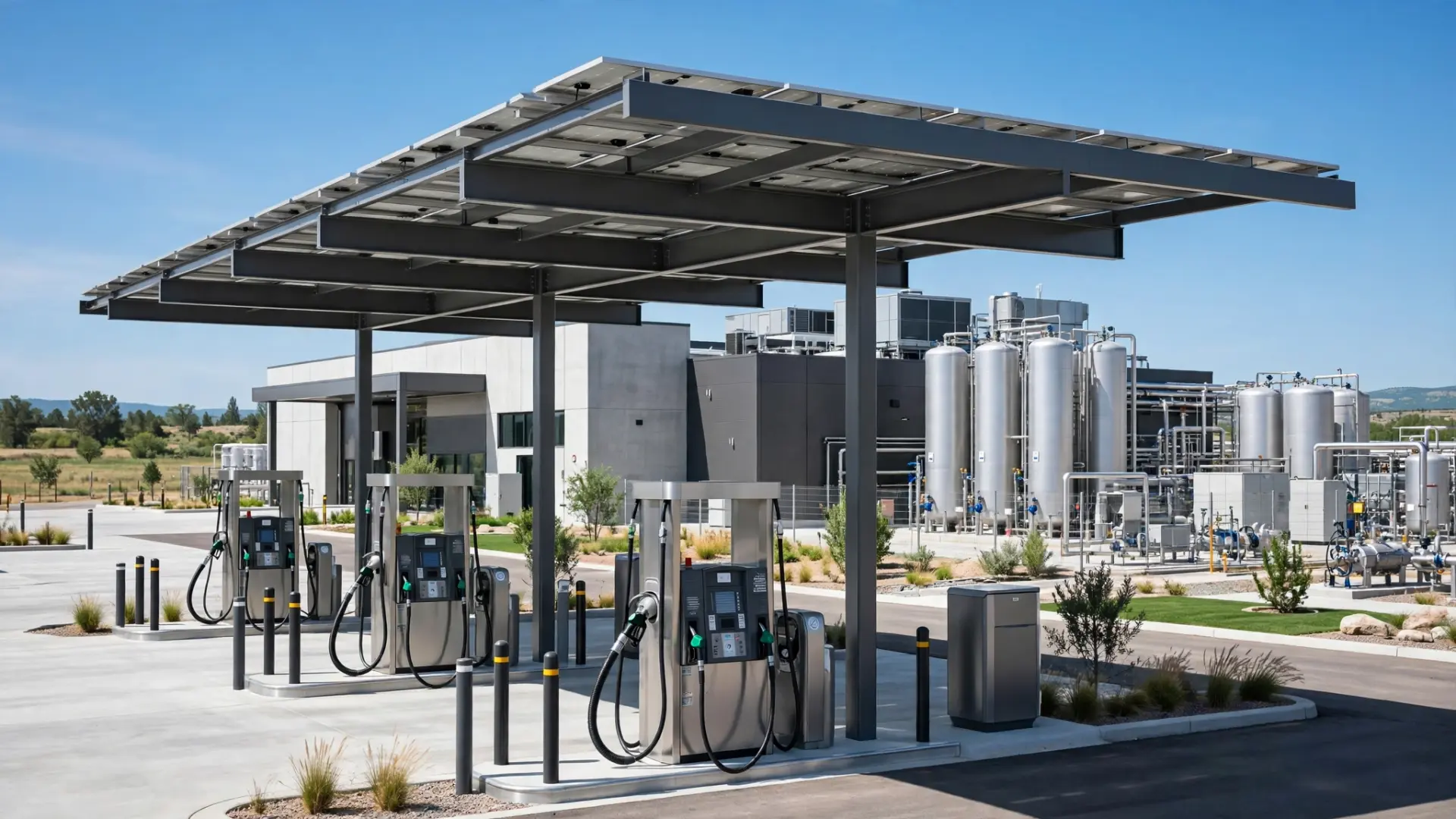
Hydrogen refueling at 35/70 MPa demands precise mass measurement of tiny, low-density fills. See why Coriolis meters are the technology of choice for H2 dispenser accuracy.
A hydrogen refueling station sells its product by the kilogram, dispensed in fills of just a few kilograms at pressures up to 70 MPa. In that demanding envelope, hydrogen refueling flow measurement leaves no room for approximate methods — and a hydrogen coriolis flow meter is the technology the industry increasingly relies on to get it right. By measuring mass flow directly, Coriolis meters sidestep the fundamental problem of hydrogen metering: a gas so light that volumetric methods struggle to resolve it accurately.
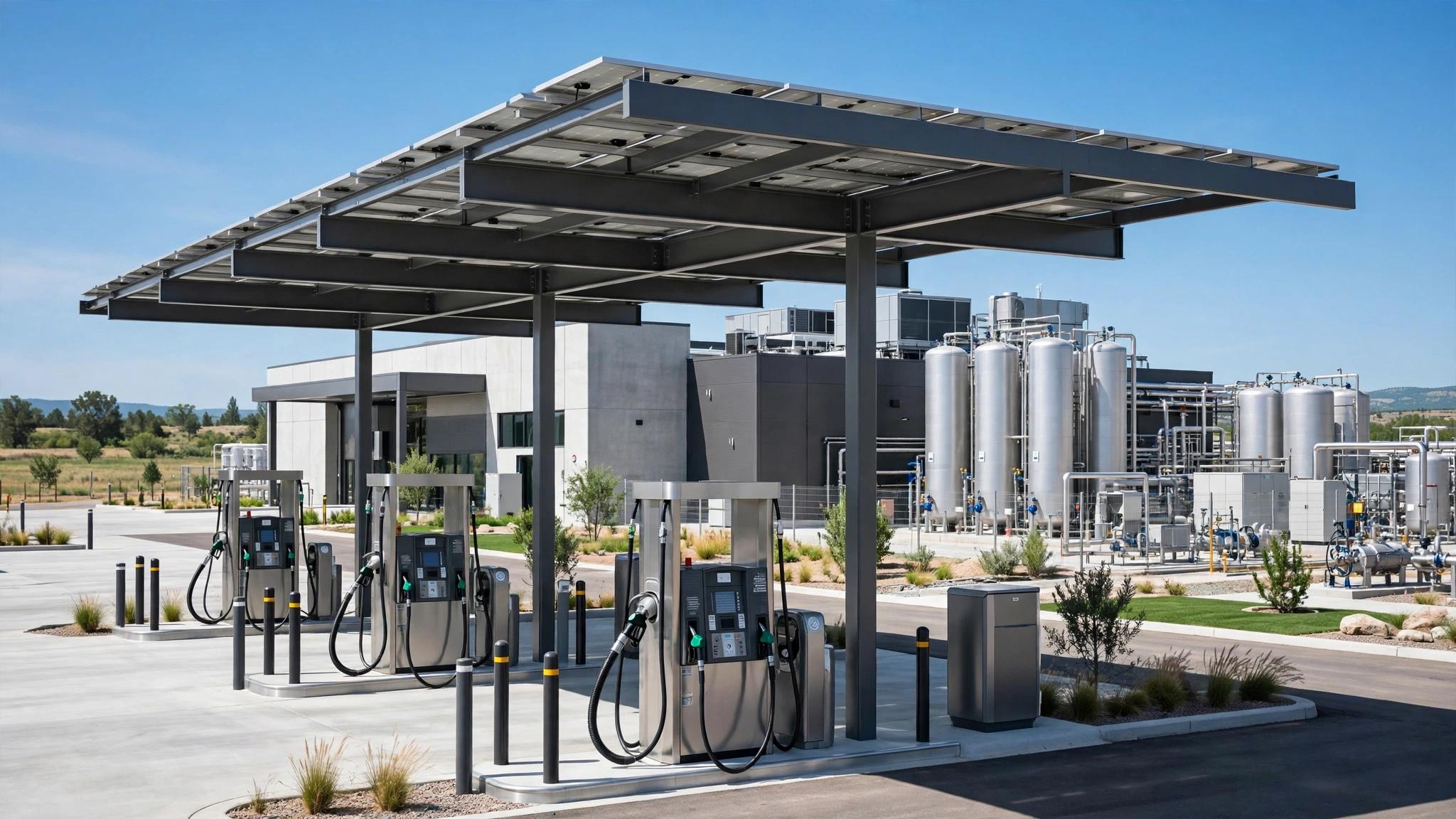
35 MPa and 70 MPa: the pressure challenge
Hydrogen vehicles refuel at two standard pressure levels, commonly known as H35 (35 MPa) and H70 (70 MPa), with the higher pressure enabling longer driving range. At 70 MPa, hydrogen is a highly compressed gas whose density still remains low compared with liquid fuels, and it changes significantly with even small temperature variations during the fill. Flow meters for dispenser service must therefore withstand extreme pressure while maintaining accuracy across rapid pressure and temperature transients. Coriolis meters designed for hydrogen service use high-strength measuring tubes rated for these pressures, with no elastomeric seals in the primary measurement path that could become a leak path for the tiny hydrogen molecule.
Small fills, big money: why accuracy matters at kilogram scale
A typical passenger vehicle fill is around 4 to 6 kilograms of hydrogen. At current hydrogen prices, a measurement error of even 1% on a single fill is commercially significant — and across thousands of fills per year at a busy station, it becomes decisive. Coriolis mass flow meters routinely achieve accuracy in the range of ±0.1% to ±0.5% of reading for such applications, with excellent repeatability. Just as important, Coriolis accuracy is specified as a percentage of reading rather than of full scale, so performance does not degrade at the low flow rates seen at the start and end of each fill, when the dispenser ramps up and tapers off.
The low-density problem for traditional meters
Hydrogen's density at refueling conditions is orders of magnitude lower than that of liquid fuels. Turbine meters struggle because the low-density gas transfers little momentum to the rotor, leading to poor low-flow performance and sensitivity to bearing friction. Differential pressure devices produce a weak signal that is easily swamped by noise. Thermal mass meters, while used in some hydrogen applications, are sensitive to gas composition and require careful calibration for hydrogen specifically. Each of these technologies measures something other than mass and converts it — introducing dependencies that hydrogen's extreme properties expose.
Direct mass measurement: the Coriolis advantage
A Coriolis meter measures mass flow directly through the phase shift of its vibrating tube — a first-principles measurement that does not depend on knowing the gas density, viscosity, or composition in advance. For hydrogen dispensing, this means the meter reads true kilograms regardless of pressure and temperature swings during the fill, and regardless of minor variations in gas purity. Combined with fast response times that track the dispenser's rapid flow changes, and a compact footprint suited to dispenser cabinets, Coriolis technology like that in the CMASS001TD hydrogen Coriolis mass flow meter addresses the core metrology challenge of hydrogen refueling: billing exactly what was delivered, every fill.
FAQs
Why is hydrogen sold by mass rather than volume?
Because hydrogen's density varies strongly with pressure and temperature, a volume measurement is meaningless for billing without accurate density compensation. Mass is invariant, so kilograms provide a fair, unambiguous basis for trade — which is why dispensers must measure mass.
Can Coriolis meters really handle 70 MPa?
Hydrogen-rated Coriolis meters are engineered with high-pressure tube designs qualified for H70 service. When specifying, confirm the meter's maximum working pressure rating covers your dispenser's maximum allowable pressure with appropriate margin.
How accurate are Coriolis meters at the low flows of a vehicle fill?
Coriolis accuracy is typically stated as a percentage of reading, so the meter maintains its specified accuracy down to low flow rates, unlike full-scale-based specifications that lose meaning at the bottom of the range. This is critical for the ramp-up and taper phases of each fill.
Does changing hydrogen temperature during filling affect the reading?
Refueling causes significant temperature swings due to compression heating and pre-cooling. Because Coriolis meters measure mass directly rather than inferring it from volumetric flow and density, these swings do not degrade the mass total.
What about hydrogen embrittlement of the measuring tube?
Material selection is essential in hydrogen service. Meters designed for hydrogen use alloys and tube geometries selected for compatibility with high-pressure hydrogen, which is one reason to choose a meter explicitly rated for hydrogen refueling duty.
Building or upgrading hydrogen refueling infrastructure? Accurate dispensing starts with the right meter. Contact VIBOTRA for help selecting a Coriolis solution matched to your pressure level, flow range, and dispenser design.